
As we stand in the first quarter of 2026, the African Continental Free Trade Area (AfCFTA) has moved past its “teething phase.” The foundational protocols are signed, the digital systems are live, and the Guided Trade Initiative (GTI) has proven that intra-African trade is not just possible—it is exceptionally profitable.
However, the next five years (2026–2031) will represent the most volatile yet transformative period in Africa’s economic history. This is the era of Operational Maturity. By 2031, the map of African trade will look unrecognizable to those still clinging to the models of 2020.
This 3,000-word forecast provides a strategic roadmap for the next half-decade, identifying the “megatrends” that will define the Single African Market.
I. 2026–2027: The Era of Digital Convergence
The first two years of our forecast will be defined by the “Great Harmonization.” The digital tools we have discussed, PAPSS, the AfCFTA Hub, and the NTB Reporting Tool, will move from early-adoption to mandatory usage.
- The Death of the “Currency Constraint”
By the end of 2027, the Pan-African Payment and Settlement System (PAPSS) will be integrated into the core banking switch of at least 40 African central banks.
- The Result: The estimated $5 billion spent annually on currency conversion fees will begin to circulate back into the hands of traders.
- The Pivot: We will see the rise of “Continental Neo-Banks”, that is. fintechs that operate exclusively within the PAPSS framework, offering borderless accounts to MSMEs without the need for a SWIFT code.
- The Rise of the “Digital Passport” for Goods
By 2027, the manual Certificate of Origin will be a relic. The “Smart Certificate”, a blockchain-verified digital asset, will be the standard. This will virtually eliminate “Origin Fraud” and allow for “Pre-Arrival Clearing,” where goods are cleared by customs while the truck is still 200km from the border.
II. 2028–2029: The Industrial Great Migration
As the “soft” infrastructure (rules and digital systems) stabilizes, the “hard” infrastructure (factories and rails) will take centre stage. This period will witness the Industrial Great Migration, the movement of manufacturing hubs from the coast to the interior.
- The Regional Value Chain (RVC) Explosion
We will see the emergence of “Specialized Economic Corridors.”
- The Textile Hub: A fiber-to-fashion chain linking cotton from Burkina Faso, spinning in Nigeria, and retail assembly in Ethiopia.
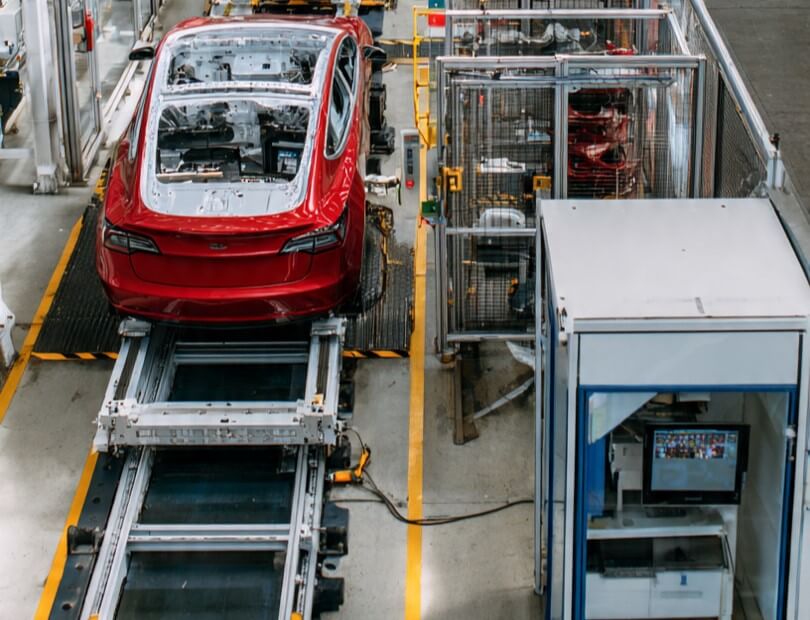
- The Automotive Circuit: The “Battery Belt” (DRC, Zambia, and South Africa) will begin producing the first indigenous African Electric Vehicles (EVs) for the mass market, protected by a unified 15% continental tariff on non-African EV imports.
- The “Green Energy” Integration
By 2029, the African Single Electricity Market (AfSEM) will be operational across three major regional pools. Surplus solar power from the Sahara will be sold to the industrial zones of the Gulf of Guinea via high-voltage DC lines. Energy will become a traded commodity under the AfCFTA, just like cocoa or copper.
III. 2030–2031: The Maturation of the Single Market
By the start of the next decade, the AfCFTA will transition from a trade agreement to a Economic Union.
- The “Single Sky” and Open Borders
The Single African Air Transport Market (SAATM) will finally achieve critical mass. Low-cost African carriers will connect Lagos to Nairobi for under $150, making “Continental Business Travel” a standard practice rather than a luxury. Simultaneously, the African Union Passport will be adopted by at least 25 nations, allowing for the free movement of “AfCFTA-Certified Professionals.”
- The $4 Trillion Milestone
By 2031, the combined GDP of the Single Market is forecasted to exceed $4.5 trillion. Intra-African trade, which stood at a dismal 15% in 2020, will reach 35-40%. Africa will no longer be a collection of “price takers” on the global stage; it will be a “price maker.”
IV. Strategic Risks: The Three “Black Swans”
No forecast is complete without a warning. The success of 2026–2031 depends on navigating three specific risks:
- Macroeconomic Divergence: If the “Big Three” (Nigeria, South Africa, Egypt) suffer simultaneous currency devaluations, the AfCFTA Adjustment Fund will be pushed to its limits.
- Infrastructure Vandalism: As trade corridors become the “lifeblood” of the continent, they become targets for non-state actors. “Corridor Security” will become a major line item in national budgets.
- The “Sovereignty Stalling”: The risk that populist leaders might roll back border openings to protect “national champions.” The AfCFTA Dispute Settlement Body must be prepared to issue heavy sanctions to prevent a domino effect.
V. Final Word: Your Position in 2031
In 2031, when people look back at the “Great Transition” of the late 2020s, which side of history will you be on?
- The Spectator: Those who waited for “perfect conditions” will find themselves priced out by competitors who took the risk in 2026.
- The Architect: Those who understood the Digital Trade Protocol, mastered the Rules of Origin, and leveraged the Transport Corridors will be the CEOs of the first “Continental Conglomerates.”
The next five years are not just a forecast; they are a call to action. The Single Market is no longer coming. It is here.
VI. The 5-Year Master-Checklist (2026–2031)
| Year | Strategic Goal | Action for the Exporter |
| 2026 | Digital Integration | Adopt PAPSS and Register on the AfCFTA Hub. |
| 2027 | Regulatory Mastery | Audit your supply chain for 40% Value-Addition. |
| 2028 | Regional Scaling | Open your first “Regional Hub” in a neighbouring trade bloc. |
| 2029 | Green Transition | Shift to solar/low-carbon logistics to avoid “Carbon Taxes.” |
| 2030 | Market Leadership | Bid for Continental Public Procurement contracts. |