
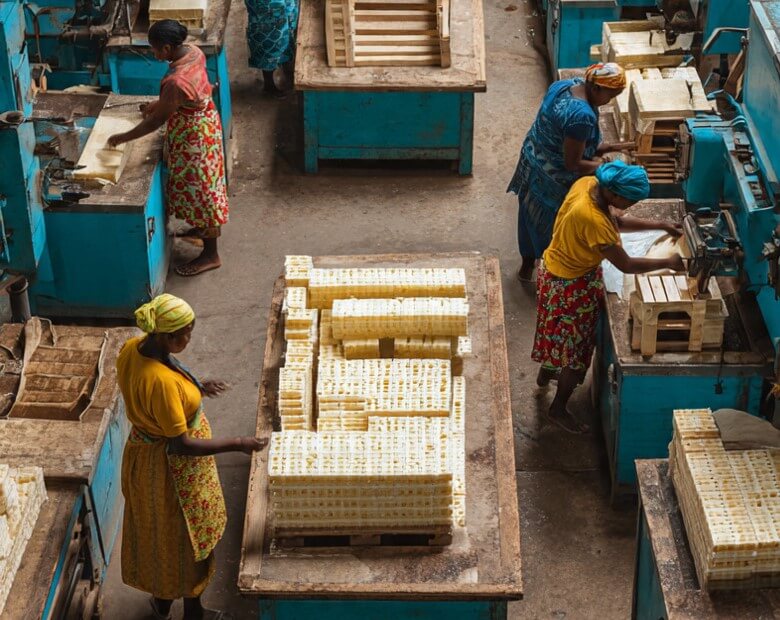
The African Continental Free Trade Area (AfCFTA) was never designed to be a “trickle-down” agreement. Its architects recognized from the outset that for the pact to succeed where others failed, it had to be radically inclusive. As we navigate the trade environment of 2026, the Protocol on Women and Youth in Trade, adopted and ratified as a formal pillar of the agreement, has transitioned from a statement of intent into a high-octane engine for economic mobility.
For women-led SMEs and young “tradepreneurs,” 2026 is the year the “support ecosystem” has finally scaled. The barriers that once felt insurmountable, lack of collateral, limited access to market intelligence, and discriminatory customs practices, are being dismantled by a new suite of digital and financial tools.
This masterclass article is the definitive guide for women and youth on how to navigate, access, and dominate the AfCFTA marketplace in 2026.
I. The 2026 Legal Framework: The Protocol on Women and Youth
In early 2025, the African Union made history by formally adopting the Protocol on Women and Youth in Trade. In 2026, this protocol is no longer just “nice-to-have” legislation; it is an enforceable legal document that mandates State Parties to take affirmative action.
1. Beyond Non-Discrimination
The Protocol goes further than simply forbidding discrimination at the border. It mandates:
- Simplified Trade Regimes (STRs): These are tailored for small-scale traders (predominantly women) to move goods below a certain value (e.g., $2,000) with minimal documentation and zero duties.
- Gender-Responsive Border Management: This includes the deployment of more female customs officers and the creation of “Trade Information Desks” specifically designed to assist women and youth in navigating technical requirements.
- Youth Quotas in Public Procurement: Governments are increasingly adopting targets to source a percentage of their goods and services from youth-owned enterprises that are “AfCFTA-ready.”
II. The Financial Frontier: Solving the “Collateral Gap”
In 2026, the traditional banking model, which required a “land title” to secure a trade loan, is being bypassed. The AfCFTA support ecosystem has introduced three revolutionary financial pillars for women and youth.
1. The AfCFTA Adjustment Fund (Special Window)
The $10 billion AfCFTA Adjustment Fund has officially opened its “SME Credit Line” in 2026. This window provides low-interest loans specifically for women and youth transitioning from informal to formal trade.
- How to Access: Apply through participating national commercial banks that have been designated as “AfCFTA Intermediaries.”
2. Digital Credit Scoring
Thanks to the Pan-African Payment and Settlement System (PAPSS) and the integration of mobile money data, 2026 marks the rise of “Trade-Based Credit Scoring.”
- The Logic: If your digital ledger shows a consistent history of selling garments or tech services across borders, that data itself becomes your collateral. Fintechs like Flutterwave and M-Pesa are now partnering with the AfCFTA Secretariat to offer instant trade financing based on transaction history rather than physical assets.
3. The “Awele” and “Youth Venture” Funds
Private equity and venture capital have finally aligned with the AfCFTA. The Awele Trust (focused on women) and various AU Youth Start-up Funds are providing equity-free grants and seed capital for businesses that demonstrate “Continental Scalability”—the ability to operate in at least three African regions.
III. The Knowledge Gap: Accessing Market Intelligence
In trade, “who you know” is important, but “what you know” is profitable. In 2026, two primary platforms provide women and youth with the intelligence needed to compete.
1. The African Trade Observatory (ATO)
The ATO has become the “Bloomberg Terminal” for the African trader.
- The Benefit: A young entrepreneur in Kigali can log onto the ATO and see exactly which countries in West Africa have the highest demand for Rwandan coffee, what the average price is, and which specific “Non-Tariff Barriers” are currently reported on that route.
- Youth-Centric Features: In 2026, the ATO has launched a mobile-app version with AI-driven “Trade Alerts” that notify you when a tariff is reduced in a sector you follow.
2. The AfCFTA Hub
Think of this as the “LinkedIn of African Trade.” The AfCFTA Hub (afcfta.app) allows women and youth to verify their businesses and get a “Trusted Trader” certificate.
- The Strategic Advantage: Being a “Verified Hub Member” automatically qualifies you for faster customs clearance and connects you with a network of over 500,000 other African businesses for B2B partnerships.
IV. Strategic Entry Points: High-Growth Sectors for 2026
Where should women and youth focus their energy this year? The data points to three “Sweet Spots.”
1. The Creative Economy (Digital Exports)
With the Digital Trade Protocol now live, the export of “intangibles”, fashion designs, music, software, and digital art, is the fastest-growing sector for African youth.
- Zero Logistics: You don’t need a truck to export a software code or a beat. You only need the AfCFTA’s harmonized IP (Intellectual Property) protection to ensure you get paid.
2. Value-Added Agribusiness
Women already dominate the agricultural supply chain; 2026 is the year they move into Processing.
- The Opportunity: Instead of exporting raw shea nuts, women’s cooperatives are using AfCFTA grants to set up “Shea Processing Hubs” that produce cosmetic-grade butter, doubling their profit margins.
3. Professional Services
The Trade in Services Protocol has opened 12 priority sectors. Young African professionals in accounting, architecture, and legal services can now bid for contracts across the continent without needing a physical office in every country.
V. Practical Steps: Your 2026 Action Plan
If you are a woman or youth reading this, here is your “Ready to Trade” checklist:
- Register on the AfCFTA Hub: Get your business verified. This is your entry ticket to the ecosystem.
- Obtain a “Rules of Origin” Certificate: Even as a small trader, you must prove your goods are African to get the 0% tariff.
- Adopt PAPSS: Start making and receiving payments in your local currency to save on USD conversion costs.
- Join a Trade Association: Organizations like AWEP (African Women’s Entrepreneurship Program) or the Continental Youth Council provide the “collective bargaining power” needed to resolve disputes at the border.
VI. Conclusion: From the Margins to the Mainstream
For too long, women and youth were the “informal” backbone of African trade—doing the hard work but reaping few of the rewards. In 2026, the AfCFTA has changed the rules of the game. The “support ecosystem” is no longer a distant promise; it is a set of tools sitting in your pocket, on your phone, and in your bank account.
The question for 2026 is no longer if you can trade across Africa, but how fast you can scale. The continent is open. The protocol is in your favour. The market is yours for the taking.