
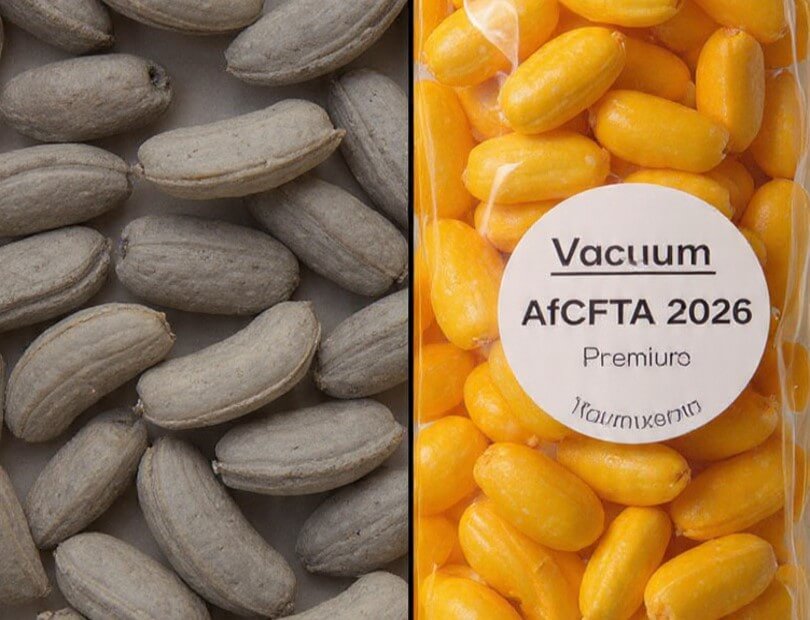
In 2025, Nigeria achieved a landmark in non-oil exports: $6.1 billion in value (up 11.5% from 2024), with volumes at 8.02 million metric tonnes and shipments to 120 countries. Cocoa beans led at $1.99 billion, followed by urea ($1.29B), cashew nuts ($456.9M), sesame seeds ($300.3M), and emerging players like shea butter derivatives and processed ginger. Crucially, value-added products now account for about 50% of this total, up from 48% in 2024, signaling a deliberate shift from raw commodity exports to processed, higher-margin goods.
This trend aligns perfectly with the African Continental Free Trade Area (AfCFTA), where rules of origin favor substantial transformation (e.g., 40% African content or change in tariff heading). Raw exports often face barriers or lower preferences, but processed versions qualify for duty-free or reduced tariffs across a $3.4 trillion continental market of 1.3+ billion people. NEPC and FMITI have made value addition a core 2026 priority, expanded production clusters (e.g., Kebbi State model), deepened SME capacity building, reduced rejects through standards training, and initiatives like the Export Production Clusters and National Export Trading Initiative.
Why does this matter for Nigerian exporters? Raw commodities fetch low prices (e.g., raw shea nuts at $300–500/tonne vs. refined shea butter at $2,000–5,000+), expose farmers to price volatility, and limit job creation. Value addition creates jobs in processing and packaging, boosts forex earnings, empowers women and youth (key in shea and cashew chains), and builds resilience via regional value chains under AfCFTA.
This guide explores practical value addition strategies for top commodities like cocoa, cashew, sesame, shea, ginger, and others tailored for SMEs. It includes steps, benefits under AfCFTA, investment needs, and real 2026 opportunities.
Why Value Addition is Essential for AfCFTA Success in 2026
- Tariff & Preference Gains: Processed goods meet RoO more easily (e.g., substantial transformation via grinding/roasting), unlocking duty-free access via GTI pilots.
- Higher Margins & Competitiveness: Processed products command 2–10x premiums (e.g., raw cashew vs. kernels).
- Job & Inclusion Impact: Creates employment in rural areas, women dominate shea processing cooperatives.
- Policy Support: NEPC’s 2026 focus includes clusters, certifications (210 new international certs in 2025), and incentives. Bans (e.g., raw shea nuts extended to Feb 2027) force local processing.
- Continental Demand: Urbanization in Kenya and South Africa drives need for processed foods and cosmetics; AfCFTA enables seamless supply.
Key Value Addition Strategies by Commodity
1. Cocoa Beans → Derivatives (Butter, Powder, Liquor, Chocolate) is Nigeria’s top earner ($1.99B raw in 2025). Raw beans ship out, but processing captures more value.
Strategies:
- Invest in small and medium grinding plants (capacity 5–50 tonnes/day) for butter and powder.
- Add fermentation and drying improvements for premium grades.
- Develop local chocolate bars for intra-African retail (e.g., Kenya and South Africa markets).
AfCFTA Benefits: Duty-free on processed cocoa; GTI shipments prove demand. Margins double and triple.
Steps for SMEs: Partner with NEPC clusters (Ondo and Cross River LGAs); access BOI loans for equipment; certify SON, NAQS.
2026 Outlook: With AfCFTA tariff concessions gazetted, target East and Southern Africa confectionery.
2. Cashew Nuts → Kernels, Oil (CNSL), Roasted and Snack Products was $456.9M raw in 2025; potential $10B annually with full processing.
Strategies:
- Shelling and roasting lines for kernels (manual to semi-automated).
- Extract CNSL for industrial use (paints and resins).
- Package roasted and salted for retail.
AfCFTA Edge: Processed kernels qualify for origin; duty-free to Kenya processors and South Africa snacks.
SME Path: Join Kano and Enugu clusters; use NEPC training for quality; target GTI matchmaking.
Potential: Shift from raw to kernels boosts earnings 2–3x.
3. Sesame Seeds → Hulled, Oil, Tahini $300.3M in 2025; high demand for oil/tahini.
Strategies:
- Cleaning/hulling facilities.
- Cold-press oil extraction.
- Blend into tahini/pastes.
Benefits: Processed forms meet RoO; duty-free to North/West Africa.
Actions: Jigawa/Kano LGAs; organic certification for premiums; NEPC support.
4. Shea Butter → Refined Butter, Oil, Cosmetics/Soaps Nigeria produces approximately 40% globally but captures <1% of $6.5B market. The raw nuts dominate. Ban extended to 2027 forces processing.
Strategies:
- Crude extraction → refining (neutralization, deodorization).
- Formulate soaps, creams, lotions.
- Women cooperatives for community plants.
AfCFTA Opportunities: Duty-free to Ghana beauty hubs/Kenya/South Africa skincare. Refined shea 10–20x raw value.
Steps: Kwara/Oyo clusters; access grants; Commodity Exchange framework for financing.
5. Ginger & Other Agro (Hibiscus, Yam Flour): Emerging: Dried ginger teas, hibiscus beverages, yam/plantain flours.
Strategies:
- Drying/milling/packaging for retail.
- Blend into functional foods.
AfCFTA Win: Processed foods liberalized; urban demand in East/Southern Africa.
Practical: Kaduna/Plateau clusters; retail packaging; Codex compliance.
6. Cross-Cutting Strategies for All Commodities
- Cluster Models: Join NEPC Export Production Clusters for shared infrastructure/training.
- Technology & Standards: Invest in solar-powered dryers, grading machines; pursue international certs (e.g., Fairtrade, organic).
- Packaging & Branding: Retail-ready packs with African appeal.
- Finance: BOI/AFREXIMBANK loans; NEPC incentives.
- Partnerships: Cooperatives for scale; GTI for buyers.
Challenges & Solutions
- Capital: High setup costs.
Solution: grants, PPPs, cooperatives.
- Skills: Processing know-how.
Solution: NEPC trainings (96,221 participants in 2025).
- Quality/Rejects: Standards gaps.
Solution: reduced via certifications.
- Market Access: Visibility.
Solution: use AfCFTA portals, digital trade protocol.
2026 Outlook & Success Pathways: With NEPC targeting enhanced value addition, clusters expansion, and AfCFTA leadership (e.g., hosting 2027 IATF), processed exports could surge. SMEs shifting to derivatives will capture higher shares of continental demand.
Value addition isn’t optional, it’s the path to AfCFTA dominance for Nigerian exporters. Start by assessing your commodity, joining a cluster, and pursuing certification. Raw exports limit potential; processed goods unlock jobs, margins, and markets.
As your Export Advisory expert, I guide SMEs through value chain upgrades, DM for strategies on your product, funding links, or processing setups. Let’s transform raw potential into continental wins in 2026!