
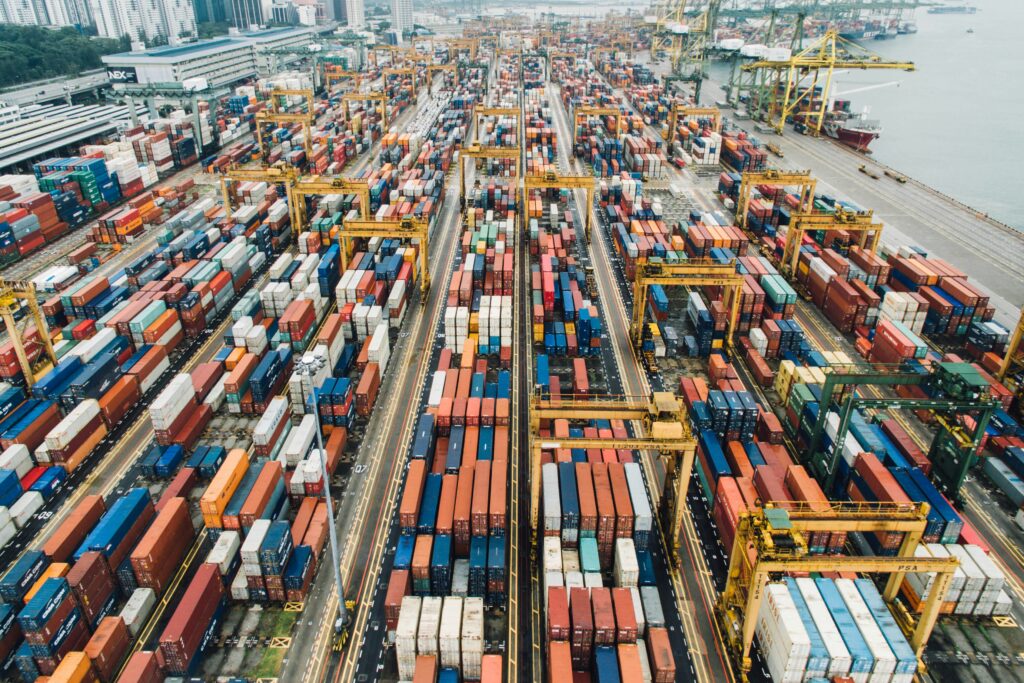
Nigeria’s export market is growing steadily beyond crude oil and that creates room for more small and medium-sized businesses to sell Nigerian products to buyers all over the world.
Nigeria’s non-oil exports amounted to about $6.1 billion in 2025, compared with $5.46 billion in 2024. Nigerian companies exported approximately 281 different non-oil products to about 120 countries. Its main exports were cocoa beans, urea fertilizer, cashew nuts, sesame seeds, cocoa butter, gold doré and miscellaneous manufactured and agricultural products.
The numbers look good, but export business is not simply about buying something in Nigeria and finding someone abroad who is willing to pay more for it. Exporting means registration, market research, product standards, documentation, logistics, customs procedures and, most importantly, finding a reliable buyer. For someone starting for the first time, it’s better to understand the process before committing a large amount of money.
Choose the right product first
One of the first decisions you have to make is what you really want to export.
Nigeria has a number of products with proven international demand. These include cocoa, cashew nuts, sesame seeds, ginger, hibiscus flowers, shea butter, processed food, fashion products, leather products and selected solid minerals. But you should not buy a product because someone tells you that it is profitable abroad.
You have to ask practical questions. Can you get the product on a consistent basis? “Can you produce the same quality from one shipment to the next? Is the product seasonal? How much processing or packaging does it take? What certificates will you require? And most importantly is there actually a market for it in the country you want to sell to?
A product may have a good international price and still be a bad choice if you have no control over its quality or supply. This is why large-scale purchases must be preceded by export market research.
Properly register your business
If you intend to go into export business on a formal basis, you should register with the Corporate Affairs Commission (CAC). Depending on the size of the business, you can operate as a business name, cooperative or limited liability company. This is because a limited liability company is generally the more practical structure for businesses that intend to trade internationally on a wider scale.
Your company documents should be proper and should also reflect the activities you want to do. Include export or international trade where applicable in the business objects of the company.
You will also need a Tax Identification Number (TIN) for the business.
The next important registration is with the Nigerian Export Promotion Council (NEPC). Commercial non-oil exporters are required to register with NEPC and the registration process provides the exporter with an official Exporter’s Certificate and identification number.
Registration is to be done online as per the current guidance. Applicants usually submit CAC documents, TIN, bank information and identification documents. The new registration fee is about ₦13,500 excluding payment charges but exporters are advised to always confirm the current rate directly with NEPC before applying.
NEPC registration is more useful than just getting a certificate. The agency also offers exporter training, market information, trade missions, capacity building programs and, in some cases, buyer linkage opportunities.
Opening of Domiciliary Account
Once the company is duly registered, open a domiciliary account with any commercial bank in Nigeria. This is important because the export proceeds are generally received in foreign currency. Your bank will also be central in processing trade documents and tracking the export transaction.
It is worth going with a bank that has a strong international trade desk, especially if this is your first export transaction. A good trade officer can help explain payment methods, e-NXP processing and how export proceeds are received and reconciled.
Do market research before buying goods
A lot of first-time exporters make the mistake of buying a large quantity of goods first and then trying to find a buyer for them. That can get really expensive.
Before you invest your money in inventory, do your research on your country of sale. You need to know the level of demand, the competition, the market prices, import duties, quality standards, packaging requirements and the regulations applicable to your product.
You should also find the right HS Code or Harmonized System Code for the product.
The HS Code is more significant than you may think. It impacts customs classification, tariffs, trade statistics, import requirements and in some cases Rules of Origin.
Mistakes in the right HS code can cause delays or disputes with customs.
Sources such as the NEPC, Customs authorities, the International Trade Centre, Trade Map, official agencies of the destination-country and industry reports can provide useful information.
The objective is simple: Know what the market expects before you spend money trying to enter it.
Find and vet your buyer
The focus of every successful export transaction is the genuine buyer. Trade fairs, NEPC programs, Chambers of Commerce, international business platforms, LinkedIn, diaspora networks, exporters’ associations and direct contact with distributors and processors are other ways to identify potential buyers.
Platforms like Alibaba, TradeKey and EC21 can also be helpful depending on the product. But you can’t just find anyone that says they want to buy. Run a background check it out before you do business with the company. Check its registration, business address, website, import history where available, references and the identity of the person you are dealing with.
International trade fraud is out there and new exporters are often an attractive target.
When both parties are comfortable, the transaction should be memorialized in a written agreement or contract.
The agreement must include: product, quantity, quality specifications, price, currency, packaging, delivery period, payment method and the agreed Incoterm.
Common Incoterms are FOB, CIF, CFR and EXW. Don’t agree to any of them just because the buyer says so. Know exactly what risks and costs you are assuming.
Agree on safe payment conditions
Payment is one area where beginners need to be especially careful. If possible, do not give generous credit terms to a buyer you have not dealt with before.
A well-formulated Letter of Credit or advance payment may reduce risk. Other payment methods can be used but each has its advantages and disadvantages.
It is best to involve your bank before you agree to a payment plan you do not fully understand. The lowest price is not necessarily the best price if there is a serious chance of not getting paid.
Process the e-NXP
For a formal commercial export, the exporter will need to process the Nigeria Export Proceeds Form (generally referred to as the e-NXP). Send through the applicable trade monitoring system and the exporter’s bank.
The e-NXP captures the value of the export transaction and enables the authorities and banks to track the repatriation of export proceeds. Some of the documents that are usually required during the process include your proforma invoice and NEPC registration details. A valid e-NXP is a key part of formal export clearance, and should not be left to the last minute.
Obtain the certificates you need for your product
Not all export products require the same certificates. Agricultural and plant products such as ginger, sesame and hibiscus may require a Phytosanitary Certificate from the Nigeria Agricultural Quarantine Service. Processed food and some regulated products may need documentation from NAFDAC. Some manufactured goods may require certification associated with the Standards Organization of Nigeria.
Solid minerals may need additional permits from the relevant government authorities.
The buyer may also require a Certificate of Origin to benefit from preferential tariff treatment under the AfCFTA or ETLS schemes.
You will also need a Clean Certificate of Inspection depending on the export inspection requirements that apply.
The trick is knowing all the product-specific and destination country requirements before the goods are shipped. Even if a cargo leaves Nigeria successfully, it may be rejected by the destination country of the importer if the importer’s country requires a certificate you failed to obtain.
Pay the correct NESS levy
The levy on the Nigerian Export Supervision Scheme is part of the export process.
Current guidance offers a rate of 0.5% of the FOB value of the shipment for non-oil exports. This should be included in the calculation of your export price. And at the start, small costs such as inspection, certification, inland transport, levies, warehousing and freight, can eat into what looked like a healthy profit margin.
The importance of document preparation
A normal export shipment can include documents such as:
- Exporter Certificate NEPC;
- e-NXP
- Commercial invoice,
- Packing List
- Certificate of Origin
- Certificate of Inspection Clean;
- Payment to NESS received;
- Phytosanitary, health or fumigation certificates as applicable;
- Air Waybill or Bill of Lading;
- Customs declaration for export.
Documents have to be matching each other. The product description, quantity, value, weight and HS Code on one document should be consistent with what is indicated on another. The most frequent causes for export delays are errors in documentation.
Organize logistics and Customs clearance
The mode of transport depends on the product and the destination. Sea freight is the best way to ship containers, bulk goods and big shipments. Air freight is faster but more expensive and is typically best for samples, urgent shipments, perishables and high value products. A lot of the trade inside West Africa is done by road.
First-time exporters generally find it useful to work with an experienced freight forwarder or licensed customs agent. The agent can assist with customs declarations, inspections, freight bookings, port procedures and shipment documentation. But you still have to know what you are submitting in the name of your company. Don’t just send everything to an agent and have no idea what’s going on.
Collect and repatriate your export earnings
The transaction does not end when the goods leave the country. The exporter is to be paid through proper banking channels and is to be in compliance with the export proceeds repatriation rules. For non-oil exports, proceeds are generally expected to be repatriated within the applicable period, usually of 180 days from the Bill of Lading date.
It is equally important to keep full bank, shipping and export records if the company intends to avail of the export incentives in future.
What the beginner has to keep in mind
Exporting can be profitable, but it poses real challenges. Transportation costs may be high. Ports could cause delays. International buyers may require tighter quality standards than those accepted in the local market. Working capital can also become a problem as cash can be tied up between purchasing goods and final payment.
Therefore, beginners should start carefully. Select a product you are familiar with. Focus on just one or two markets. Begin with a small, manageable shipment. Use reputable suppliers. Quality confirmed before shipping. Check your buyer. Work with good logistics people and do your numbers right. Most importantly: Don’t skimp on documentation or quality.
Lastly
You can start an export business in Nigeria but not as a get-rich-quick business but a proper business. The ones who find the cheapest products are not the strongest exporters. They are the ones who are able to deliver the right product, in the agreed quality, with the correct documentation, at the expected time.
Nigeria’s expanding non-oil export market has opportunities in agriculture, manufacturing, processed foods, solid minerals, and services. The AfCFTA is also creating more opportunities for Nigerian businesses to access buyers across Africa.
If you are just starting out, keep the first step simple. Choose a product and then find a market and research both properly before spending heavily. Understand your product, buyer, paperwork and logistics and the export process becomes so much easier to handle.
Please bear in mind that export fees, documentation requirements, banking rules and certification procedures are subject to change. Always cross-check latest information with NEPC, CBN, Nigeria Customs, NAQS, NAFDAC and other relevant agencies before committing funds or shipping goods.
Stay Updated With Export Opportunities
Want to learn more about export opportunities, international markets, trade updates, business insights and practical guides for growing your business globally?
Follow the Export Pundit WhatsApp Channel and stay connected with the latest export information, opportunities and resources.
Follow the Export Pundit channel on WhatsApp: https://whatsapp.com/channel/0029VbDqERt89inmi1pn6Q0Y