
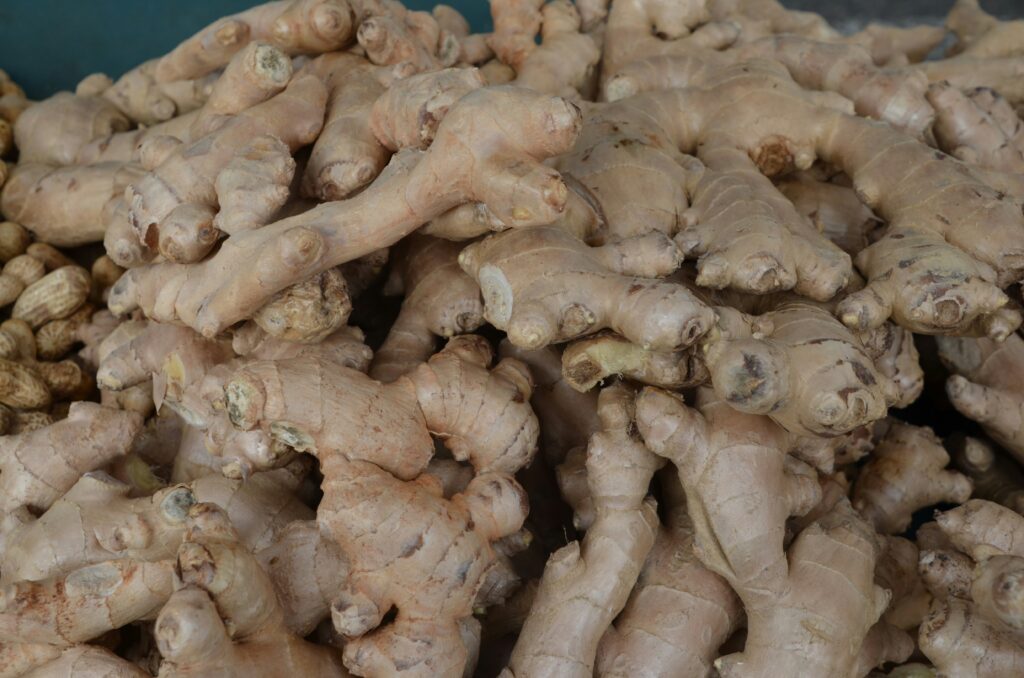
Exporting ginger from Nigeria to Ghana can be a good business opportunity especially for exporters who understand how to source quality ginger, meet regulatory requirements and move goods efficiently across the West African corridor. Nigeria has long been one of the world’s major ginger-producing countries. Much of the country’s ginger is grown in Southern Kaduna, especially in areas around Kachia, but production is also found in states like Nasarawa, Plateau, Gombe and Kogi.
Nigerian ginger is valued for its pungency, strong aroma and relatively high content of oleoresin and essential oil. These features make it appealing to food processors, spice dealers and manufacturers. The industry has had a bad time, however. A serious outbreak of a fungal disease in 2023 sharply reduced production on many farms. “Supply is gradually improving but exporters need to consider seed shortages, disease pressure and higher local prices.”
Ghana also grows ginger but there have been times of local deficit that have opened the door for imported supplies. Nigeria is close and this offers exporters a clear advantage over suppliers from Asia, and Nigeria and Ghana are both ECOWAS countries, which can also lead to opportunities for preferential regional trade.
For someone looking at the business, the important thing is to realise that ginger export is not as simple as buying bags of ginger and putting them on a truck to Ghana. Quality, documentation, sanitary requirements, logistics and buyer’s requirements all count.
Choose the type of ginger you are exporting
Exportable forms of ginger are available. Another choice is fresh ginger, which is more perishable and so needs to be transported more quickly, and closely monitored for temperature and moisture. Regional and international bulk trade tends to favour dried split ginger because it is simpler to store and transport.
Other options are ginger powder, ginger oil and extracts. These products can offer better margins due to the added processing involved but may also have more stringent food-safety, packaging and registration requirements.
Dried split ginger is usually a little easier to work with for the first timer in the business.
But speak to the buyer before you buy anything. Ask them to specify the exact form they require, the quantity they need, the moisture level they will accept, preferred packaging, and whether any testing or certification is required. Don’t think all buyers want the same specification; it is dangerous to do so.
Know the HS Code:
HS Code or Harmonised System Code is used to classify the goods in worldwide trade.
HS Code 0910.10 is commonly used for ginger that is not crushed or ground.
Powdered, ground or otherwise prepared ginger may be classified under a different tariff subheading, so the correct classification should be verified prior to preparing export documents. This is more important than it seems. The HS Code can impact Customs treatment and duties, Rules of Origin and destination documents.
If you classify it incorrectly, the shipment can be delayed or you may have difficulty getting preferential treatment especially if it is an export under an existing multilateral trade agreement.
Quality comes first
Quality is one area where new exporters can lose money very quickly.
Buyers of dried split ginger are generally very particular about moisture, cleanliness and appearance. A typical export grade product would be expected to have moisture of around 10% or less, impurities not more than around 2%, and no visible mould, infestation or foreign material.
Ginger should be properly washed, split, dried, sorted and graded before packing.
Moisture in particular is important. If ginger is not properly dried, it can go mouldy, either in storage or on the way to Ghana. If you test the moisture properly, that’s better than going by the way it looks. Where required, laboratory analysis can also be used to confirm that the product meets the buyer’s specification and any relevant food-safety requirements.
Dried ginger is normally packed in food grade polypropylene bags in 25 kg or 50 kg size but the buyer can specify other sizes. Good labelling will identify the product, its origin, weight, batch and exporter.
Register your export company
A commercial exporter should do business thru a duly registered Nigerian business.
The first step is normally to register with the Corporate Affairs Commission (CAC) and get a Tax Identification Number.
The exporter also needs to register with the Nigerian Export Promotion Council (NEPC) and obtain an Exporter’s Certificate. NEPC registration is important as it formally classifies the company as a non-oil exporter and may also provide access to training, market information and export-support programs.
A domiciliary account with a Nigerian bank is also important because export proceeds are usually received through the formal banking system.
Buy large quantities after looking for a serious buyer
One of the simplest ways to get it wrong is to buy several tonnes of ginger just because the local price looks attractive. A better way is to find the market first. A serious buyer in Ghana should be able to tell you the quantity they need, the grade they need, the packaging, the location of delivery and the payment arrangement they prefer.
The transaction must be covered by a written contract or a clear commercial agreement.
You should agree on issues such as price, quantity, delivery date, product specification, payment method and who will do certain transport and customs responsibilities.
Samples are sent before you place a big order which is wise.
If the buyer is satisfied with your sample, you have a much clearer standard to work with in preparing the full shipment.
Purchase from reputable farms or suppliers
With the buyer’s specs in hand, it’s time to start sourcing. Work with farmers, cooperatives or aggregators that can guarantee consistent quality. This is particularly important in light of recent issues in Nigeria’s ginger industry. Ask about the provenance of the ginger, how it was harvested, how it was dried and how long it has been stored. Before you buy a large quantity check the product. For larger transactions it may be worth doing laboratory testing before moving the whole cargo. The cheapest ginger is not always the best if the poor-quality means rejection further down the line.
Properly prepare the ginger
Preparation of dried split ginger is normally washing, splitting, drying, sorting, grading and removal of foreign materials.
Then the product should be bagged properly and stored in a dry, clean place.
Fumigation may also be needed. The fumigation periods and the certificate validity can be time sensitive, so before arranging the treatment, exporters must check the current requirements according to the information gathered for this guide.
The Federal Produce Inspection Service (FPIS) may also be involved in farm product quality, weight, packaging and fumigation procedures. This is because charges and processes vary, it is safer to check for current levies directly when planning for a shipment.
Get a phytosanitary certificate
Plant-health controls apply to agricultural products.
For ginger leaving Nigeria, the Nigerian Agricultural Quarantine Service (NAQS) is relevant. NAQS may be required to inspect the shipment prior to issuing a Phytosanitary Certificate.
The certificate helps demonstrate that the ginger has been inspected and meets applicable plant-health requirements. This document is of particular importance because plant-health authorities in Ghana will also need assurance that the cargo is free of regulated pests. Don’t wait for the day the truck is ready to leave to do this.
The shipment can be delayed due to inspection, treatment or documentation problems.
Process your e-NXP
Commercial exports also require the Nigeria Export Proceeds Form, or e-NXP. The e-NXP is obtainable at www.tradesystem.go.ng. This is sent via the relevant trade-monitoring system and the exporter’s bank. The e-NXP records the export transaction and is also linked to repatriation of export proceeds. Your bank can assist you in obtaining the documentation you need. Make sure the contents on the e-NXP are consistent with your invoice and other export documents.
Obtain the Required Certificate of Origin
Both Nigeria and Ghana are members of ECOWAS and therefore potentially eligible Nigerian products could enjoy preferential tariff treatment under regional trade arrangements such as the ECOWAS Trade Liberalisation Scheme (ETLS).
In general, ginger actually grown and harvested in Nigeria may have a good basis to satisfy the “wholly obtained” principle under Rules of Origin.
But the purchase of ginger in Nigeria does not guarantee its Nigerian origin. In such cases, you should keep appropriate sourcing records and obtain the appropriate Certificate of Origin where preferential treatment is being claimed. Ensure correct ETLS or ECOWAS documentation is in place before shipment. This distinction is especially important for traders who buy products outside the region. Foreign ginger re-packaged in Nigeria does not automatically mean it is of Nigerian origin.
Get your export documents ready
For a normal export shipment of ginger, there could be several documents. These may include the NEPC Exporter’s Certificate, e-NXP, Commercial Invoice, Packing List, Phytosanitary Certificate, Fumigation Certificate where necessary, Certificate of Origin, applicable FPIS certificates, Certificate of Analysis where necessary and the relevant transport document.
For road shipments a waybill will be important. Sea shipments require a Bill of Lading, and air shipments use an Air Waybill. Consistency is the most important thing. The quantity, weight, product description, HS Code and value should match in the documents. Little differences can create needless customs problems.
Confirm the Ghanaian importer is ready
The Nigerian exporter is just one end of the transaction. The importer in Ghana also must comply with the required Ghanaian procedures. The plant-health controls are managed by the Plant Protection and Regulatory Services Directorate (PPRSD) of Ghana’s Ministry of Food and Agriculture. The Ghanaian importer may need to apply for an Import Permit before the arrival of the shipment for commercial plant imports.
The Nigerian Phytosanitary Certificate will usually be accompanying the goods and the shipment may be inspected or sampled at the Ghanaian entry point.
The Ghana Food and Drugs Authority may also come into play especially where the ginger is processed, powdered, branded or packaged for retail sale. How involved the FDA is can depend on whether it’s raw bulk ginger or a finished packaged food product.
Therefore, your buyer should confirm what is required before you ship the goods.
Choose the best means of transportation
Road transport is generally the most viable option for Nigeria-to-Ghana trade.
The most common route is from Nigeria through Seme border into Benin, through Cotonou and Lomé, then Aflao into Ghana.
Even with good conditions, the actual journey may only take a few days but exporters have to factor in extra time for Customs checks, border procedures, checkpoints and other delays.
A goods forwarder who understands the Nigeria – Benin – Togo – Ghana corridor can save you a lot of trouble. For larger volumes, another choice is a sea freight from Lagos to Tema.
Air freight costs more and is therefore better for sample, urgent or smaller, higher value consignments.
Be realistic on the challenges
Exporting ginger can be very profitable but there are some risks to be aware of.
Local prices can spike unexpectedly, especially if supplies are short. You agree on a fixed selling price before you get your stock and then your profit can be lost before the shipment leaves Nigeria.
Poor drying can cause mould.
Phytosanitary rejection may be caused by pest problems.
Incorrect paperwork can delay a truck at the border.
Transport delays can be costly.
There is also a risk of payment if the buyer is not sufficiently verified.
These problems can be dealt with, but need to be taken into account before pricing the transaction.
In the long run, Nigeria has a natural advantage in supplying ginger to Ghana due to proximity and existing production and regional trade arrangements.
But the business is best done when done carefully. Start with a tested buyer. The exact quality specification is to be agreed. Source from trusted suppliers. Ginger, prepare and test properly. Ensure that the Nigerian export requirements have been met and that the Ghanaian importer has obtained the required permits before the departure of the goods.
Often, it is better for a beginner to start out with a smaller trial shipment than to try to move a full truckload at once.
The first shipment will be a great education for you in sourcing, documentation, border procedures and the expectations of the buyer. Once this process is working, it can be repeated and scaled up.
It is key to note that, export regulations, permits, levies and documentation requirements may change. Always check current procedures with NEPC, NAQS, FPIS, NAFDAC, Nigeria Customs and the relevant Ghanaian authorities before committing funds or sending a shipment.
Get More Practical Export Guides
Want to learn more about exporting from Nigeria, finding profitable export opportunities, understanding documentation, and avoiding costly mistakes?
Follow the Export Pundit channel on WhatsApp for practical export guides, industry updates, opportunities, and tips for Nigerian exporters.