
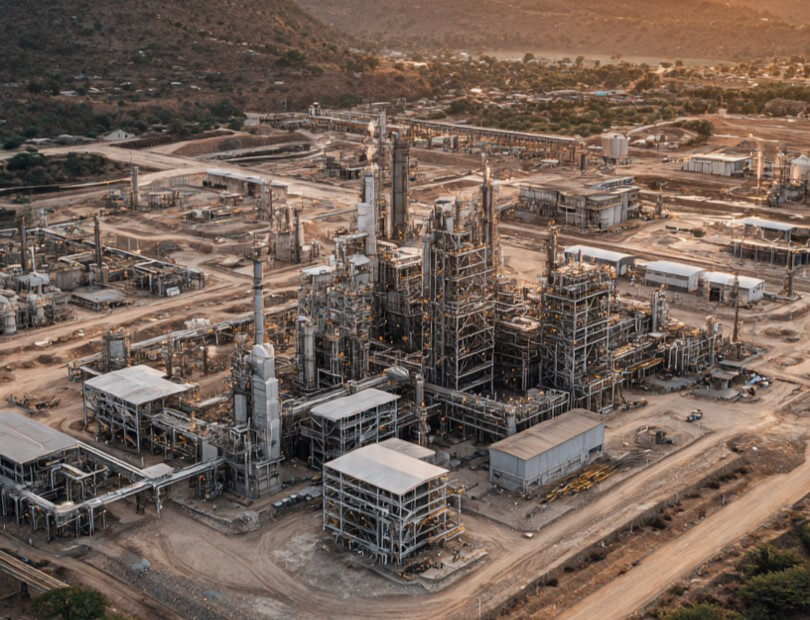
Nigeria sits on one of Africa’s richest endowments of solid minerals, with commercially viable deposits of gold, lithium, tin, columbite-tantalite (coltan), iron ore, lead-zinc, gemstones (tourmaline, sapphire, ruby), limestone, kaolin, feldspar, barite, bitumen, and rare earth elements spread across most of the 36 states and the Federal Capital Territory. Despite this potential, the sector has historically contributed less than 1% to GDP and export earnings, largely due to artisanal and small-scale mining (ASM) dominance, limited large-scale investment, inadequate infrastructure, regulatory gaps, and over-reliance on raw exports.
In 2025–2026, however, the African Continental Free Trade Area (AfCFTA) is emerging as a game-changer for Nigeria’s solid minerals exports. With tariff reductions on most mineral lines (Category A liberalization for many processed/beneficiated products), finalized rules of origin (RoO) for 92.4% of tariff lines, and growing continental demand for critical minerals in the global energy transition (batteries, electronics, renewable tech), Nigeria has a strategic window to shift from raw ore exports to higher-value processed or semi-processed products.
The Federal Ministry of Solid Minerals Development (FMSMD) and the Nigerian Export Promotion Council (NEPC) are aligning efforts: the 774 LGA export mapping initiative identifies mineral-rich LGAs, the Nigerian Minerals and Mining Act (2007, amended) and new regulations emphasize local value addition, and AfCFTA’s focus on regional value chains favors beneficiation (crushing, milling, smelting, refining) to meet RoO thresholds (40% African content or substantial transformation). Gold dore (semi-refined gold) already featured in 2025 non-oil export figures ($228.8 million), while lithium exploration in Nasarawa, Kwara, Kogi, and Ekiti is accelerating amid global battery demand.
This article provides a comprehensive guide to solid minerals exports under AfCFTA in 2026: key minerals with export potential (gold, lithium, tin/coltan, iron ore, gemstones, industrial minerals), RoO compliance requirements, continental market demand, beneficiation strategies, investment/funding options, challenges (environmental, regulatory, infrastructure), and practical steps for Nigerian miners, processors, and exporters to scale operations and capture preferential trade opportunities.
Key Solid Minerals with AfCFTA Export Potential in 2026
- Gold (Dore Bars, Refined Gold, Jewelry Components) Nigeria produced an estimated 1.5–2 tonnes of formal gold in 2025 (plus significant ASM output), with dore exports contributing $228.8 million to non-oil totals. Major deposits in Zamfara, Kebbi, Osun, Kaduna, Niger, and Plateau.
- AfCFTA Opportunity: Processed dore or refined gold qualifies under RoO (smelting/refining in Nigeria); duty-free to South Africa (jewelry hub), Egypt (refining), and Kenya (retail).
- Demand Drivers: African jewelry market, investment demand, and electronics.
- Value Addition Path: Move from dore to refined bullion or semi-finished jewelry components.
- Lithium (Spodumene, Lepidolite, Petalite Concentrates) Exploration and small-scale mining ramped up in 2025–2026 in Nasarawa, Kwara, Kogi, Ekiti, and Cross River. Global battery demand (EV, renewable storage) drives interest.
- AfCFTA Edge: Beneficiated concentrates (spodumene at 5–6% Li₂O) meet RoO; duty-free to South Africa (battery manufacturing hub) and Egypt (emerging processing).
- Outlook: Lithium could become a flagship critical mineral export by 2027 if processing scales.
- Tin, Columbite-Tantalite (Coltan), and Other Critical Minerals Historic producers (Jos Plateau for tin; Nasarawa for coltan). Tantalum/niobium for electronics, tin for soldering.
- AfCFTA Benefits: Processed concentrates qualify; demand in South Africa (electronics assembly).
- Strategy: Focus on ethical sourcing (conflict-free certification) and beneficiation.
- Iron Ore, Lead-Zinc, and Base Metals Itakpe (Kogi) iron ore revived; lead-zinc in Ebonyi, Benue.
- Opportunities: Semi-processed ores/pellets to regional steel mills (South Africa, Egypt).
- RoO Compliance: Pelletizing/sintering qualifies as a transformation.
- Industrial Minerals (Limestone, Kaolin, Feldspar, Barite, Gypsum) Abundant in Ogun, Cross River, and Benue. Used in cement, ceramics, paints, and oil drilling.
- AfCFTA Win: Processed powders/grades duty-free to construction/chemical industries in West/East Africa.
- Gemstones (Tourmaline, Sapphire, Ruby, Emerald) Jos Plateau, Kaduna. High-value, low-volume exports.
- Potential: Cut/polished stones to South Africa/India via AfCFTA routes.
Rules of Origin Compliance for Solid Minerals Under AfCFTA
- Wholly Obtained: Mined in Nigeria → qualifies automatically (e.g., raw ore).
- Substantial Transformation: Beneficiation (crushing, washing, concentrating, smelting, refining) changes tariff heading or adds 40% African value.
- Example: Raw gold ore → dore bars → refined gold bullion qualifies.
- Lithium ore → spodumene concentrate qualifies.
- Cumulation: Inputs from other AfCFTA countries (e.g., processing equipment from South Africa) count as originating.
- Certificate of Origin: Issued by NEPC (submit mining leases, production records, cost breakdowns).
- 2026 Status: Most mineral lines (Chapters 25–27, 71) finalized; ongoing negotiations have minimal impact.
Continental Demand and Target Markets
- South Africa: Battery manufacturing, jewelry, steel, electronics.
- Egypt: Refining, construction materials.
- Kenya/Rwanda: Emerging processing hubs, retail jewelry.
- Ghana/Côte d’Ivoire: Regional blending/refining.
- Growth Drivers: Energy transition (lithium, cobalt substitutes), urbanization (construction minerals), jewelry demand.
Beneficiation Strategies & Investment Needs
- Small-Scale: Mobile crushing/washing plants for concentrates.
- Medium-Scale: Flotation plants, smelters for dore/refined products.
- Large-Scale: Integrated mining-processing-refining (e.g., lithium hydroxide for batteries).
- Funding: Afreximbank (critical minerals facility), BOI mining loans, NEXIM guarantees, NEPC incentives, FMSMD grants.
- Clusters: Jos Plateau (tin/gemstones), Zamfara/Kebbi (gold), Nasarawa (lithium).
Challenges & Practical Solutions
- Artisanal Mining Dominance: Formalization via licenses, cooperatives.
- Environmental & ESG Compliance: Adopt sustainable practices; conflict-free certification.
- Infrastructure: Poor roads/power—use air corridors for high-value (gold).
- Regulatory Gaps: Strengthen FMSMD oversight; align with AfCFTA.
2026 Outlook & Scaling Pathways.
With global critical mineral demand and AfCFTA preferences, solid minerals exports could triple by 2030 if beneficiation scales. Early movers in gold/lithium will lead.
Conclusion
Solid minerals are Nigeria’s next frontier under AfCFTA; gold, lithium, tin/coltan, and industrial minerals are ready for duty-free continental trade with value addition. Start by securing mining licenses, pursuing beneficiation, obtaining CoO, and targeting GTI markets.
As your Export Advisory expert, I support miners/processors with RoO guidance, funding applications, market intelligence, and beneficiation strategies. DM for tailored plans. Let’s unlock Nigeria’s mineral wealth through AfCFTA in 2026!